Montenegro · Bay of Kotor · Our Lady of the Rocks
Perast: islets, museum, boats and how to get there
A baroque town on the inner Bay of Kotor with two islets in front of it: what we know about the boats, the museum prices and hours, and the trips sold by our booking partners.
Today
Opening hours for every month are on the Opening hours page.
Checked against the official website on 23 October 2026 · Official source
In short
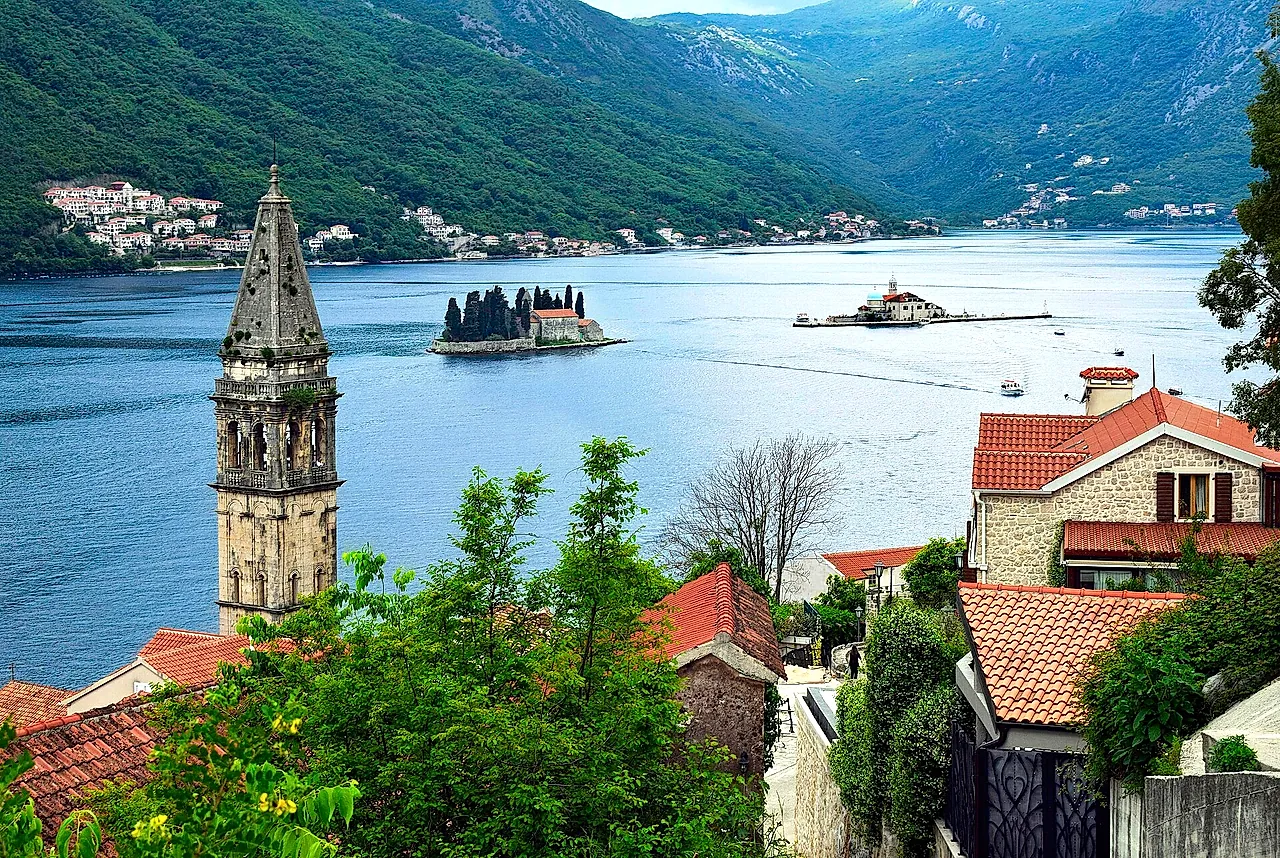
- Perast is a baroque town on the inner shore of the Bay of Kotor, 14.3 km from Kotor (about 24 minutes by car, our routing estimate without traffic). In front of it are two islets: Our Lady of the Rocks, an artificial islet with a church and a museum, and St George, a natural islet with a 12th-century church and a cemetery.
- We found no official operator, fare or timetable for the boats from Perast to the islets. Ask on the quay what the fare includes, and compare it with the trips of our booking partners. Our suggestion, not an official rule: check that the boat is registered and ask for a ticket.
- The Perast Town Museum costs €8. It is open Tuesday to Sunday, 10:00 to 16:00 from 15 October to 15 April and 8:00 to 20:00 from 15 April to 15 October. It is closed every Monday, all of January, 1 May, 13 and 14 November and Orthodox Easter.
- Hours and entry price for the church-museum on Our Lady of the Rocks are not confirmed by official sources, and neither is whether visitors can land on St George.
- The Fašinada is held on 22 July: decorated boats sail to the islet and stones are thrown into the sea.
Our Lady of the Rocks
The islet was made by sinking stones and old sailing ships around a rock, to build a church on it (town tourist organisation; Wikipedia). According to tradition, on 22 July 1452 sailors of Perast found an icon of the Virgin and Child on the rock, and the main altar stands over the rock of the legend. Sources disagree on the date of the present church: we say only that it dates from the 17th century and was renovated in the early 18th.
The museum in the church holds archaeological finds, paintings of Perast ships, nautical instruments, silver ex-votos and an embroidery by Hijacinta Kunić-Mijović, partly worked with her own hair (town tourist organisation). Opening hours and ticket price are not confirmed by official sources. Dress soberly, as in any church: that is our advice, and we found no rules on clothing or photos.
St George’s islet
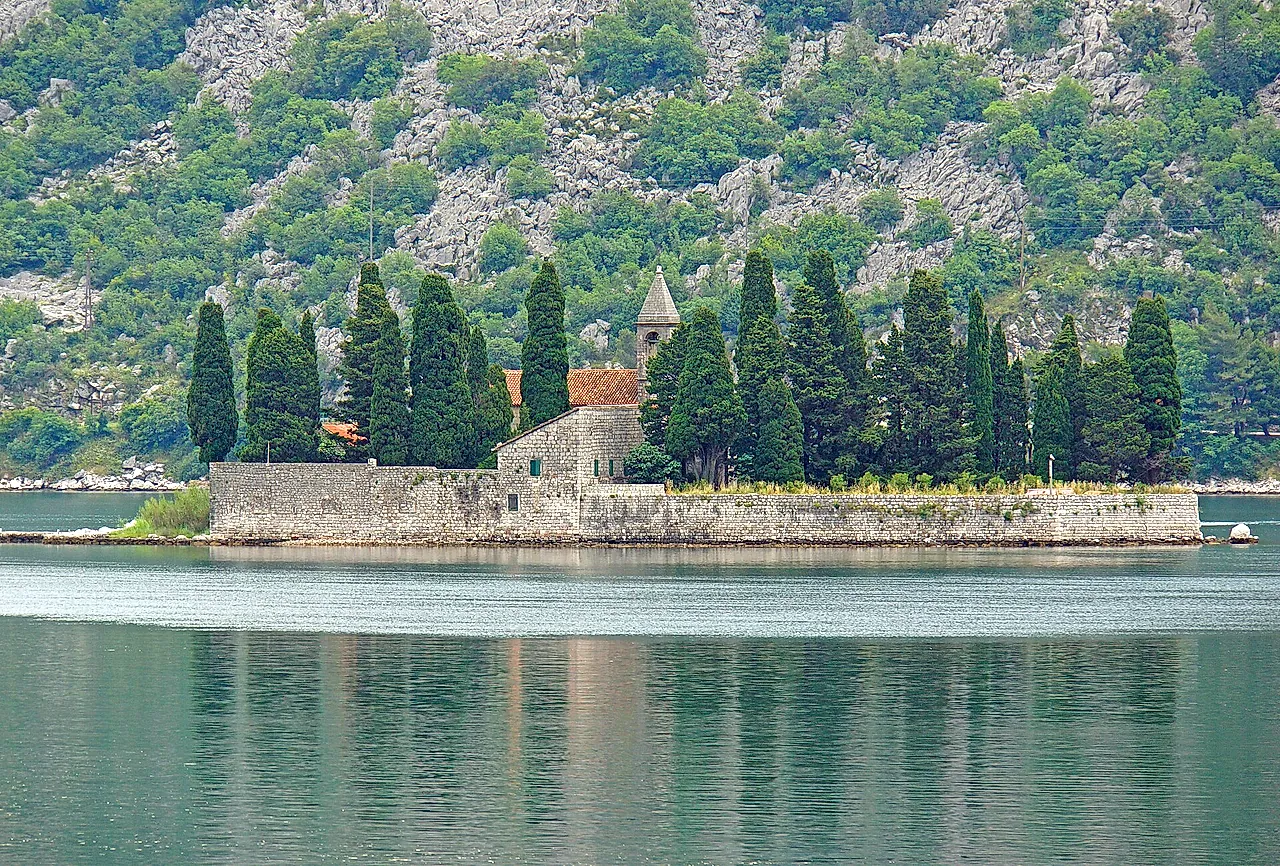
St George is a natural islet with a 12th-century church and the cemetery where the people of Perast were buried (town tourist organisation). Whether visitors can land is not confirmed.
The tourist organisation says that the story of a French soldier, Ante Slović, and Katica Kalfić (1813) inspired Böcklin’s painting Isle of the Dead. We have not seen this confirmed elsewhere, so read it as “it is said”.
Perast Town Museum
The museum is housed in the Bujović Palace, a 17th-century residence, and was founded in 1937. It holds over 3,000 objects from the 15th to the 20th century, among them Coronelli’s atlas of 1690, a 16th-century sword recalling the victory over the Turks in 1654, a model of the Adriana, the last ship of the Perast fleet, and a Venetian bronze falconet (Perast museum page).
Admission is €8; see the Tickets page for the price list and the Hours page for the seasons.
The waterfront and the town
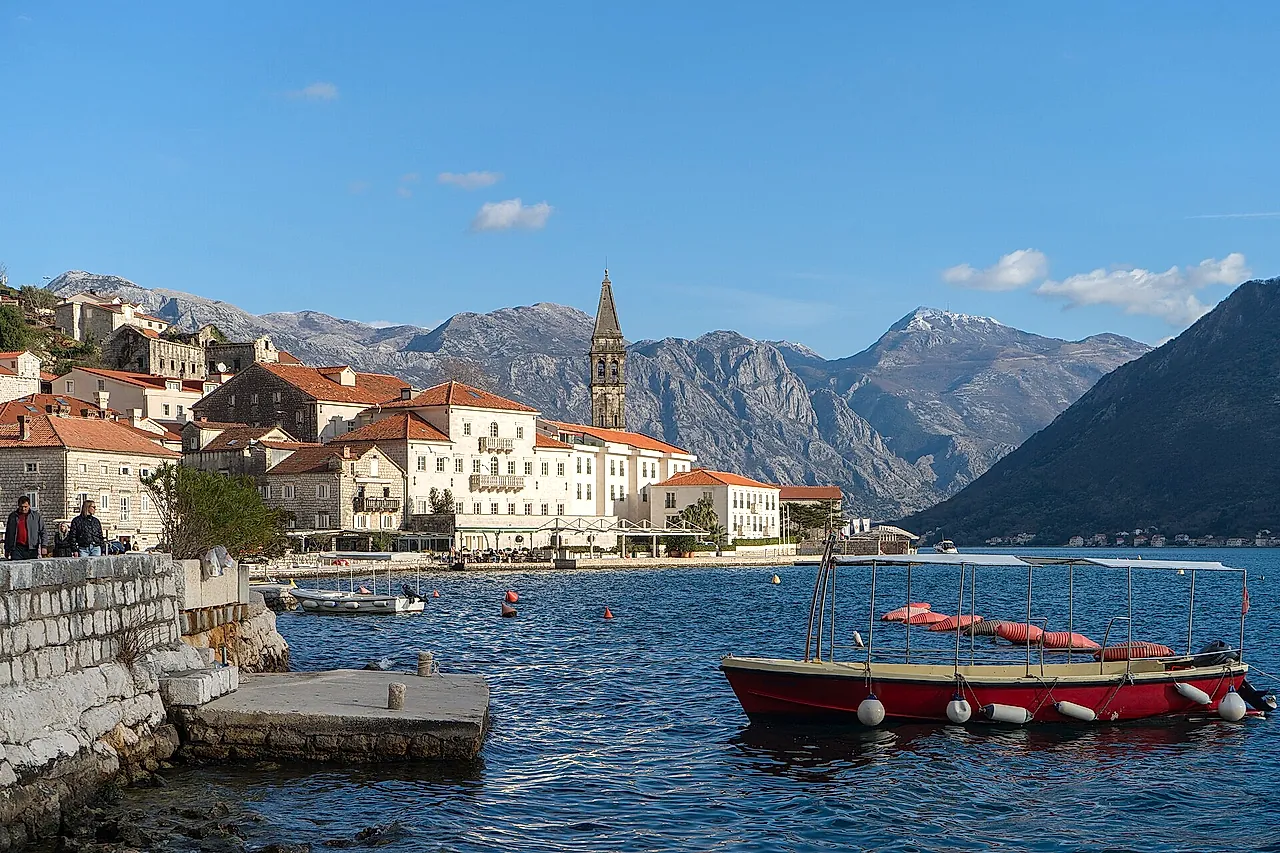
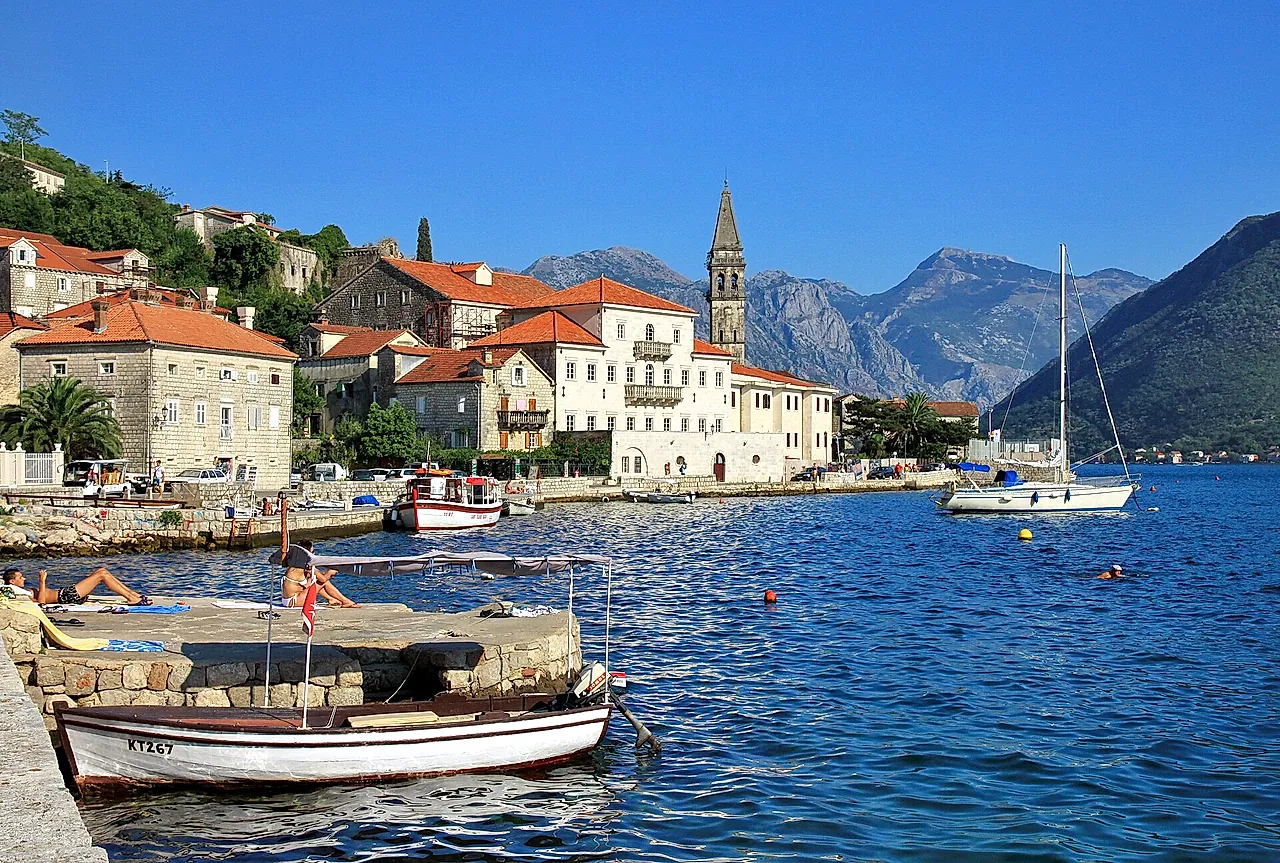
Wikipedia counts about 20 baroque palaces and 19 churches (17 Catholic, 2 Orthodox). Instead of walls, Perast had defensive towers beside the noble palaces, and the fortress of the Holy Cross stands above the town (sources disagree on its date, so we give none).
Perast was under Venice from 1420 to 1797, its period of greatest splendour. Captain Marko Martinović opened the first nautical school in the Balkans in 1698, and Matija Zmajević, who served Tsar Peter the Great, became admiral of the Russian fleet in 1727 (Perast museum page).
The Fašinada, 22 July
Each 22 July a procession of decorated boats sails from the shore of Perast to the islet of Our Lady of the Rocks, and stones are thrown into the sea; according to the tourist organisation’s event page, this keeps the islet stable. The tradition is linked to the legend of 1452; the date is a tradition handed down, not a documented one.
Baedeker’s Austria-Hungary of 1911 gives the island’s feast as 15 August; it describes the pilgrimage church of Santa Maria dello Scalpello on an island, the rock of San Giorgio, and the town of Perasto at the foot of the mountain, with no road through the town and one under construction along the beach (p. 409).